Quick Summary: Core Rules for Choosing the Best Puzzle Table
Dedicated puzzle tables solve the central friction of home puzzling: reclaiming the dining room table from multi-week assembly projects while protecting your neck, back, and unfinished pieces. Rather than improvising with felt mats or taking over shared living spaces, selecting the right dedicated work surface requires balancing interior dimensions, sorting storage, and ergonomic angle support.
The ALL4JIG puzzle range includes workspaces for different room sizes and puzzle routines.
Standard 1,000-piece puzzles require an interior felt basin of at least 28" x 20" to 30" x 22", fitting standard 27" x 20" cuts from Buffalo Games and 27.6" x 19.7" European formats from Ravensburger.
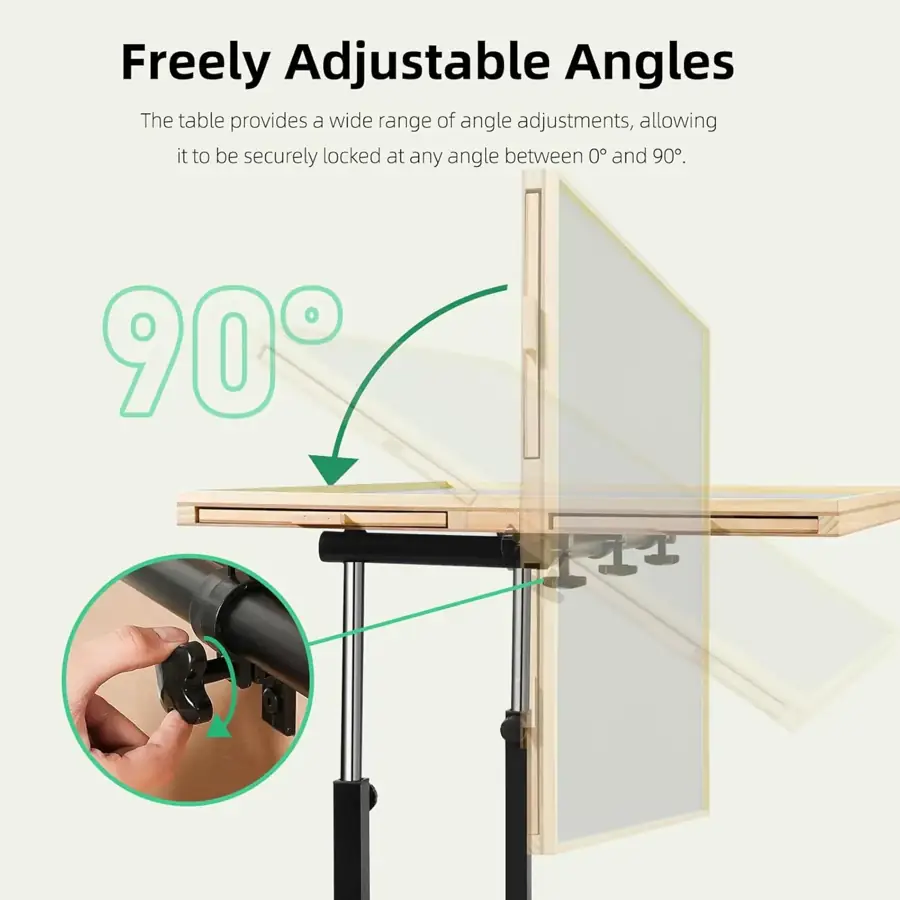
Choosing a table with an integrated tilting easel alleviates the severe 45° to 60° forward cervical flexion that causes acute upper trapezius muscle fatigue during extended assembly sessions.
Key Takeaways: 4 Rules Before You Buy
-
Measure Usable Interior Basin, Not Outer Frame: Always verify the flat felt dimensions inside the raised wooden perimeter lip rather than the manufacturer's exterior footprint. A standard 1,000-piece puzzle requires a minimum 28" x 20" to 30" x 22" felt surface.
-
Prioritize 4 to 6 Magnetic Sorting Drawers: Sliding drawers built into the table chassis allow efficient color and edge piece organization, while magnetic latches prevent accidental spills when moving or storing the unit vertically.
-
Select an Adjustable Tilting Easel (15°–35°): An incline mechanism brings the puzzle into your natural line of sight, reducing forward cervical spine strain by 35% to 55% and deflecting glare from direct overhead task lighting.
-
Choose Your Structural Format Based on Space: Freestanding folding tables provide complete independence from other furniture, tabletop puzzle boards store flat under a bed or couch, and convertible coffee tables permanently integrate into your living room decor.
Why Invest in a Dedicated Puzzle Table: Solving the Three Domestic Dilemmas
Every dedicated puzzler eventually confronts three domestic realities that compromise both the enjoyment of the hobby and household harmony. The first is the classic "dining table hostage crisis": starting a complex 1,000 or 1,500-piece puzzle transforms a shared family eating area into an untouchable construction zone for weeks at a time. The resulting domestic friction often forces rushed assembly or premature teardowns.
The second dilemma is biomechanical. Working over a standard horizontal dining or coffee table forces the puzzler into a prolonged forward head posture, tilting the cervical spine forward between 45° and 60°. This sharp downward angle multiplies effective gravitational head weight on the cervical vertebrae from a baseline 10–12 lbs up to 42–49 lbs, generating severe trapezius tension and spinal strain.
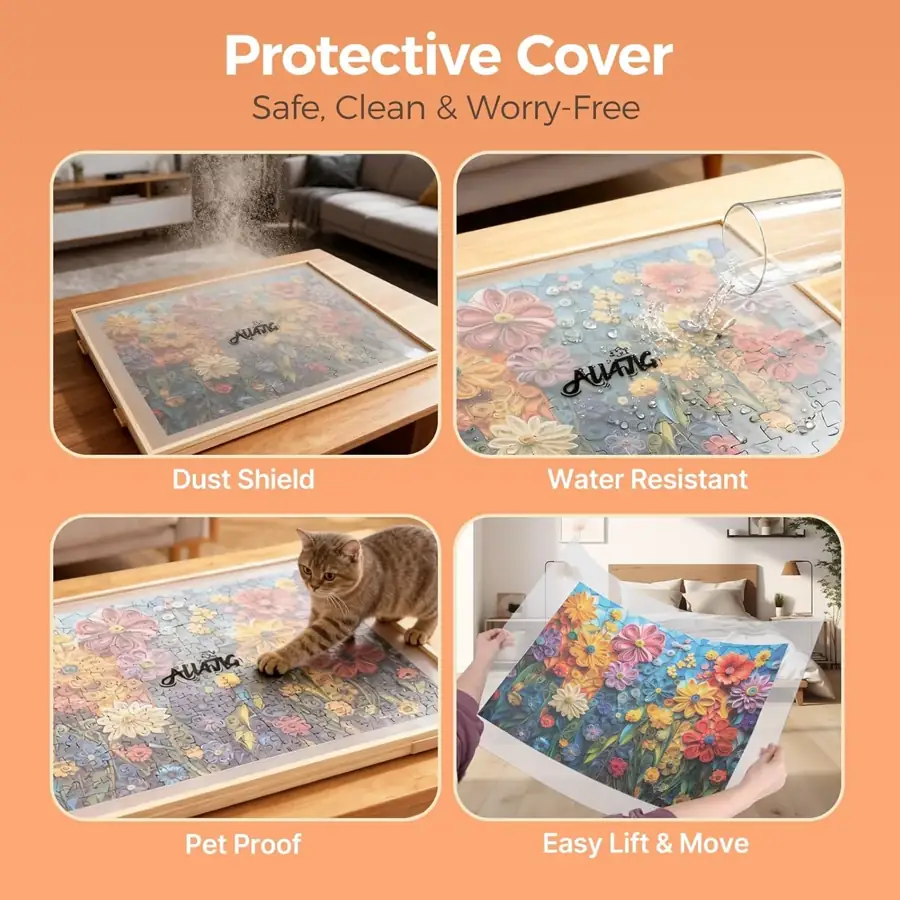
The third dilemma involves domestic pets. Loose cardboard pieces resting on an open tabletop trigger feline predatory swatting and batting instincts, while unbonded edge pieces are easily knocked to the floor or chewed. Dedicated puzzle furniture solves all three dilemmas simultaneously by establishing an independent, ergonomic workstation with integrated protective covers.
The 5 Core Types of Puzzle Tables: Finding Your Ideal Living Space Fit
Puzzle furniture comes in five primary structural formats, each tailored to different living spaces, storage footprints, and assembly habits. Choosing the right design depends on whether you have a dedicated hobby room, require quick under-bed storage, or want multi-purpose living room furniture.
Freestanding folding tables offer the greatest ergonomic independence, featuring diagonal folding leg stays that stabilize the workstation against lateral racking.
Collapsing down to under 3.5 inches allows seamless horizontal clearance beneath standard residential bed frames and inside shallow closets.
Structural Format Comparison Matrix
| Table Format | Structural Design | Best For | Portability & Storage Footprint | Price Range |
|---|---|---|---|---|
| Freestanding Folding Table | Independent folding legs with locking braces; tilting top with 4-6 drawers | Puzzlers wanting a standalone workstation that folds away | Folds flat to under 3.5 inches; stores under beds or behind doors | $120–$220 |
| Tabletop Puzzle Board | Portable flat wooden tray with drawers and optional swivel turntable base | Using atop existing dining tables or kitchen islands | Highly portable; slides horizontally under standard couches | $50–$110 |
| Tilting Easel Table | Adjustable multi-angle ratcheting top with felt lining | Hobbyists with chronic neck strain or glare issues | Medium footprint; requires horizontal or secure upright storage | $90–$170 |
| Lap / Bed Tray Desk | Compact folding lap desk with tilting surface | Cozy puzzling in bed, on armchairs, or in small spaces | Ultra-compact; limited primarily to 300-500 piece puzzles | $40–$75 |
| Convertible Coffee Table | Permanent hardwood furniture with removable wooden cover | Puzzlers seeking elegant everyday home decor integration | Permanent living room footprint; zero storage teardown needed | $250–$600+ |
Puzzle Table Sizing & Piece Capacity Guide: Working Surface vs. Exterior Dimensions
The most frequent buyer mistake in puzzle furniture is confusing exterior frame dimensions with interior working basin capacity. Puzzle tables feature raised wooden perimeter borders (often 0.75" to 1.5" wide on each side) to keep pieces from sliding off. A table advertised with exterior dimensions of 30" x 22" may only offer an interior felt surface of 28" x 20", making finished assembly uncomfortably tight.
Standard 1,000-piece puzzles from mainstream American and European manufacturers share consistent dimensions: Buffalo Games puzzles measure 27" x 20", while Ravensburger 1,000-piece puzzles measure 27.6" x 19.7" (70 x 50 cm). A table with an interior working area of 28" x 20" to 30" x 22" provides an ideal fit.
However, oversized 1,000-piece brands such as White Mountain measure 24" x 30", meaning they will not fit standard 1,000-piece puzzle tables and require a 1,500-piece table frame with at least 25" x 31" usable interior space.
For larger 1,500-piece puzzles measuring 31.5" x 23.6" and 2,000-piece puzzles finishing up to 38.6" x 29.5" to 38.5" x 26.5", a dedicated heavy-duty workstation exceeding 39" x 30" is mandatory.
Piece Count vs. Finished Dimensions Spec Table
| Piece Count | Typical Finished Dimensions | Recommended Usable Basin Surface | Compatible Major Brands |
|---|---|---|---|
| 300 – 500 Pieces | 18" x 14" to 21" x 15" (48 x 36 cm) | 22" x 16" (56 x 41 cm) | Ravensburger, Buffalo Games, Galison, Mudpuppy |
| 1,000 Pieces (Standard) | 27" x 20" to 27.6" x 19.7" (70 x 50 cm) | 29" x 21" to 30" x 22" (76 x 56 cm) | Ravensburger, Buffalo Games, Springbok, Galison |
| 1,000 Pieces (Oversized) | 24" x 30" (61 x 76 cm) | 25" x 31" to 26" x 32" (66 x 81 cm) | White Mountain Puzzles, MasterPieces |
| 1,500 Pieces | 31.5" x 23.6" (80 x 60 cm) | 33" x 25" (84 x 64 cm) | Ravensburger, Educa, Clementoni |
| 2,000 Pieces | 38.6" x 29.5" to 38.5" x 26.5" (98 x 75 cm) | 40" x 31" (102 x 79 cm) | Ravensburger, Buffalo Games, Trefl |
Biomechanical Ergonomics: Why Tilting Easels Eliminate Puzzler's Neck and Glare
Sustained tabletop assembly involves repetitive visual scanning, precise manual manipulation, and prolonged downward gaze. On a flat horizontal surface, this posture strains the cervical musculature and produces what physical therapists term "puzzler's neck."
Occupational biomechanical research indicates that working flat forces cervical head flexion between 45° and 60°, increasing effective gravitational head weight on the cervical spine to 42–49 lbs and creating acute trapezius fatigue.
Adjusting the puzzle easel to a 15° to 35° tilt brings the working surface directly into the natural ocular axis, reducing forward neck flexion by 35% to 55%. This angular elevation significantly diminishes electromyographic muscle strain in the upper back while simultaneously deflecting direct ceiling light reflection away from the puzzler's eyes.
For adult puzzlers who assemble for two or more hours per session, an easel mechanism transforms the physical experience from a fatiguing chore into a relaxing, sustainable hobby.
Compare the available ALL4JIG puzzle tables against the measurements and features discussed here.
Surface Materials & Friction Science: Microfiber Flannel vs. Smooth Wood Veneer
The surface lining of a puzzle table dictates both assembly speed and piece stability when working at an incline. While smooth finishes allow easy sliding, inclined puzzling requires high-friction textile backing to prevent pieces from tumbling downward.
Materials testing demonstrates that microfiber flannel and wool baize linings possess a high static friction coefficient (μ_s = 0.58–0.68) against puzzle blueboard, holding loose pieces securely at tilt angles up to 30° to 35° without slippage. In contrast, smooth polyurethane wood veneer exhibits a low friction coefficient (μ_s = 0.22), causing puzzle pieces to slide uncontrollably at incline angles as shallow as 8° to 12°. Consequently, any table featuring a tilting easel must be lined with microfiber flannel or baize to avoid catastrophic piece avalanches.
Hardware Engineering Checklist: Drawers, Leg Bracing, and Pet Defense
Evaluating the structural build quality of a puzzle table before purchasing protects you from wobbly frames, spilled sorting trays, and ruined puzzles. Pay particular attention to the drawer latches, folding leg joinery, and protective cover materials.
Drawer channels must incorporate magnetic catches rated for at least 2.5 N pull force to keep sorting compartments securely shut during vertical transport.
Freestanding tables require diagonal metal locking struts on folding legs to eliminate up to 15mm of lateral racking under downward leaning pressure.
When collapsed, the overall table thickness should measure under 3.5 inches to ensure smooth horizontal clearance under standard residential beds.
Finally, to protect unfinished puzzles from domestic cats, a semi-rigid 0.8mm to 1.5mm translucent silicone cover prevents feline claw grip and predatory swatting, providing 98% defense against disrupted pieces.
7-Point Pre-Purchase Hardware Checklist
- [ ] Interior Felt Dimensions Verified: Confirm interior felt measurements exceed your preferred puzzle brand's finished dimensions by at least 1.5 inches in both length and width.
- [ ] Magnetic Drawer Retention: Verify all sorting drawers have magnetic catches rated to at least 2.5 N pull force so they stay closed when carrying the table.
- [ ] Triangulated Leg Bracing: Check that folding legs feature diagonal metal locking stays to prevent wobble and lateral racking.
- [ ] Multi-Angle Ratcheting Easel: Ensure the easel mechanism provides at least 3 distinct locking positions between 15° and 35° with secure locking teeth.
- [ ] High-Friction Textile Lining: Confirm the surface is covered in non-slip microfiber flannel or wool baize rather than smooth, unlined veneer.
- [ ] Under-Bed Storage Clearance: Confirm the collapsed unit profile is under 3.5 inches thick for seamless storage under bed frames or couches.
- [ ] Pet-Protective Cover Included: Ensure the table includes a translucent 0.8mm to 1.5mm flexible silicone or clear acrylic cover to safeguard unfinished puzzles from cats.
Price Tiers & Frequently Asked Questions: What to Expect for Your Budget
Puzzle tables span a clear spectrum of pricing tiers based on construction materials, mechanical adjustability, and fine furniture craftsmanship:
- Budget Tier ($40 – $75): Basic flat wooden puzzle boards or folding lap trays without tilting mechanisms. Typically equipped with 2–4 unlatched drawers, best suited for casual puzzlers assembling 500-piece jigsaws on existing furniture.
- Mid-Range Sweet Spot ($80 – $160): The optimal value tier for adult enthusiasts. Includes full-featured freestanding folding tables or premium tilting easel boards with 4–6 magnetic drawers, microfiber flannel surfaces, and pet-protective covers.
- Furniture-Grade Tier ($180 – $450+): Solid hardwood construction (oak, walnut, or pine), convertible coffee tables with removable wooden tops, or luxury multi-angle motorized workstations designed as permanent living room centerpieces.
A quality table in the mid-range sweet spot easily accommodates standard 1,000-piece puzzles with interior working dimensions of 28" x 20" to 30" x 22".
Investing in tilting functionality delivers certified 15° to 35° cervical posture relief and deflects lighting reflections.
Integrated protective silicone covers keep unfinished projects completely safe from curious domestic pets.
Frequently Asked Questions
What size puzzle table do I need for a 1,000-piece puzzle? For standard 1,000-piece puzzles from brands like Buffalo Games (27" x 20") and Ravensburger (27.6" x 19.7"), choose a table with an interior usable surface of at least 28" x 20" to 30" x 22". If you assemble oversized brands like White Mountain (24" x 30"), you must size up to a 1,500-piece table with an interior surface of at least 25" x 31".
Are tilting puzzle tables worth the extra cost? Yes. Biomechanical studies demonstrate that tilting the puzzle work surface between 15° and 35° reduces forward cervical neck flexion by 35% to 55%, preventing the severe 42–49 lbs spinal load caused by bending over a flat table. An angled surface also redirects overhead lighting reflections, preventing eye fatigue.
Can I store a folding puzzle table vertically with an unfinished puzzle inside? Yes, provided two conditions are met: the table surface is lined with high-friction microfiber flannel, and a snug protective silicone or felt cover is clamped over the pieces. Tables with magnetic drawer latches prevent sorting drawers from sliding open during upright storage.
How do I cat-proof my puzzle setup? Use a semi-rigid translucent silicone cover (0.8mm to 1.5mm thickness) over your unfinished puzzle when stepping away. Cats are attracted to loose, elevated cardboard edges; a smooth silicone surface denies claw grip and predatory swatting interest, providing 98% defense against pet disruption.
Is it better to buy a puzzle board or a full puzzle table with legs? If you already have a spacious dining table or kitchen island and simply want dedicated sorting drawers and easy under-bed storage, a portable puzzle board is ideal. If you want to keep your dining table permanently clear and enjoy dedicated height and angle ergonomics, choose a freestanding folding table with independent legs.
For the next step, read Best Puzzle Tables with Drawers: 2026 Buying Guide & Capacity Comparison.